STEVE: Hi everyone. Laurel and I are going to talk our way through this video produced by the Tate Modern, a gallery in England. It’s kind of like an art tour! While we’re all stuck in quarantine, I hope we can do more of these museum visits together.
HI STEVE!
I love this idea, thank you for inviting me along.
Currently, I am watching How to Draw Like Paula Rego, which I don’t think is a tour, but I thought I’d start with a How-To video because I feel inadequate about art!
STEVE: I think inadequate about art! would make an excellent T-shirt. I’m excited cuz Paula Rego sounds like a delicious pasta dish! Or maybe just the sauce
LAUREL: Oh my god. This reminds me of the time I told my gymnastics coach my mom was teaching me how to cook. She was like “what are y’all making?” When I told her it was spaghetti, Coach scoffed and said “that’s not cooking! Unless you’re making the sauce…”
And I was like, “no it’s Prego.” I was really proud of the Prego part because my mom liked it so much and I thought it must mean we had Fine Taste, but instead, Coach declared that was Not Cooking.
Ok I just started using Grammarly and sometimes it tells me things like “your tone is forceful.” For this one, I think Grammarly would say “your tone is sorta sad, dude.”
STEVE: Pfft! What a jerk. Coach probably went home and stared at a sadness dinner of like peanut butter on rice. Just salty she didn’t get invited to Prego night.
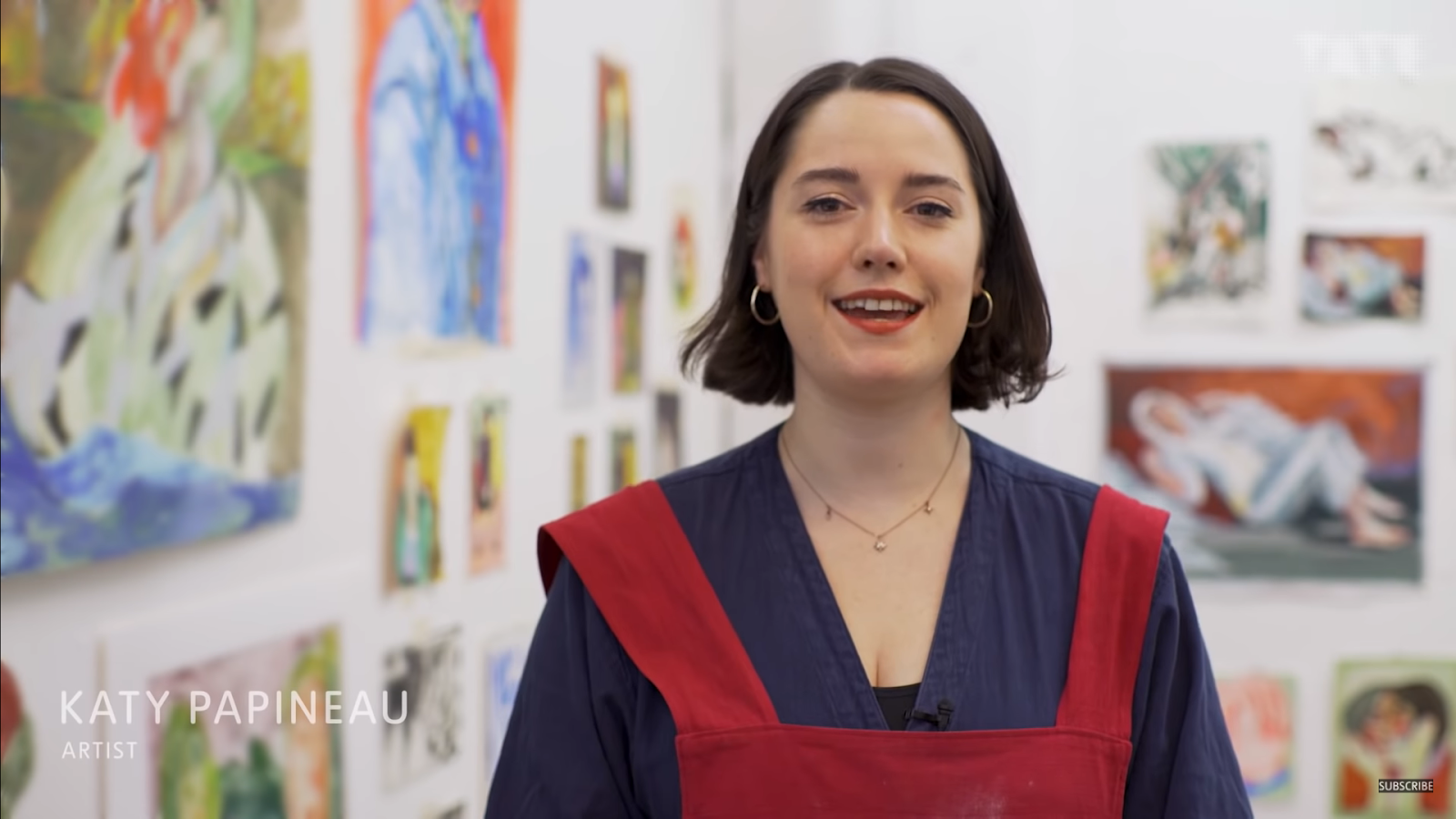
Hi my name is Katy and I’m an artist based in London. Today, we’re going to explore how to draw like Paula Rego.
LAUREL: I love how this video is led by a Brit with a bob. Katy Papineau pronounces her name like the letters (hi, my name is Kay-Tee).
STEVE: I’m stealing this for a story: “Brit with a bob.”
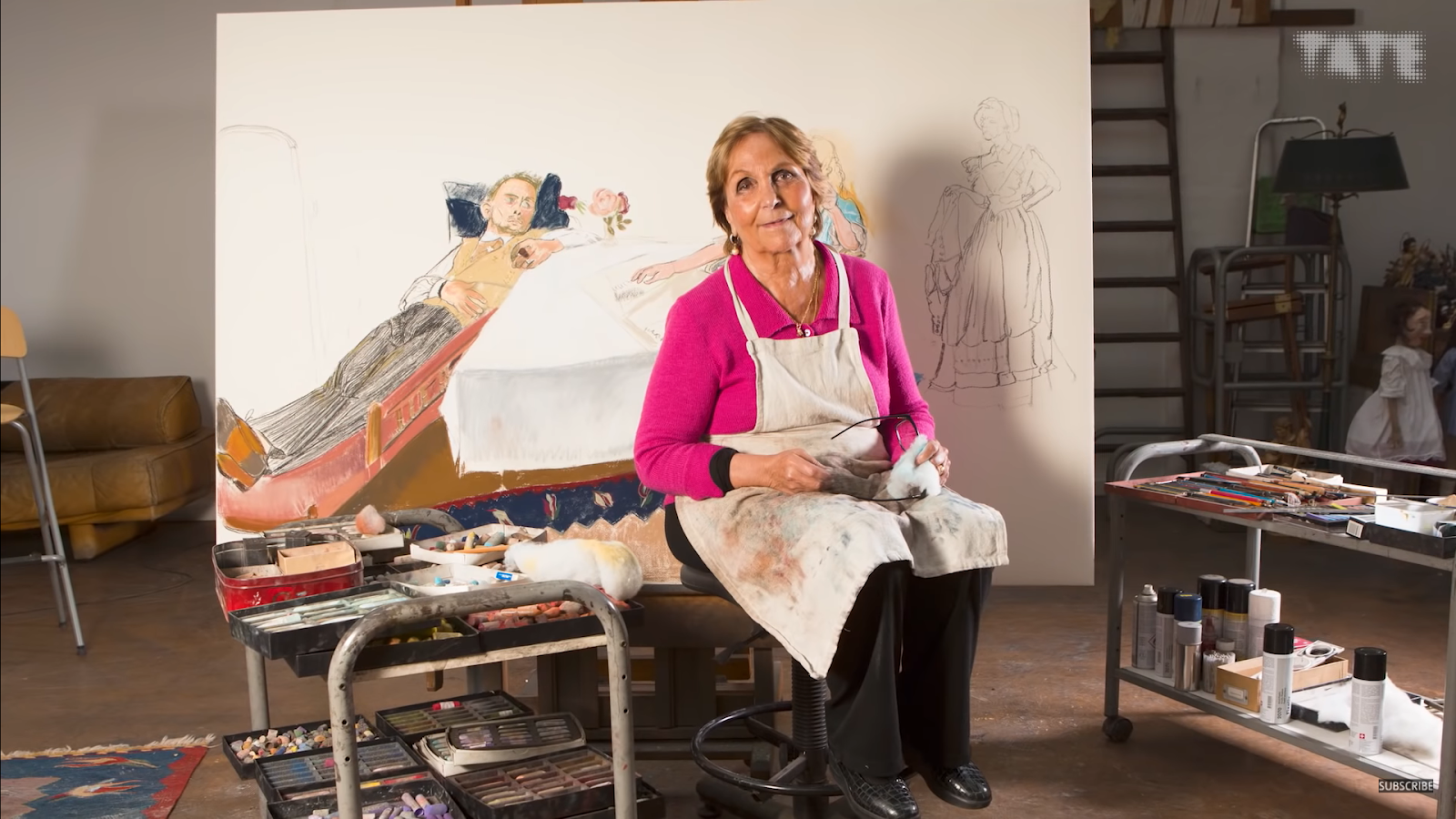
Paula Rego is a Portugeuse-born artist who is known for her paintings and drawings based on folk tales. Her work often reshapes traditional stories to reflect personal experiences. And focuses on female roles within the family.
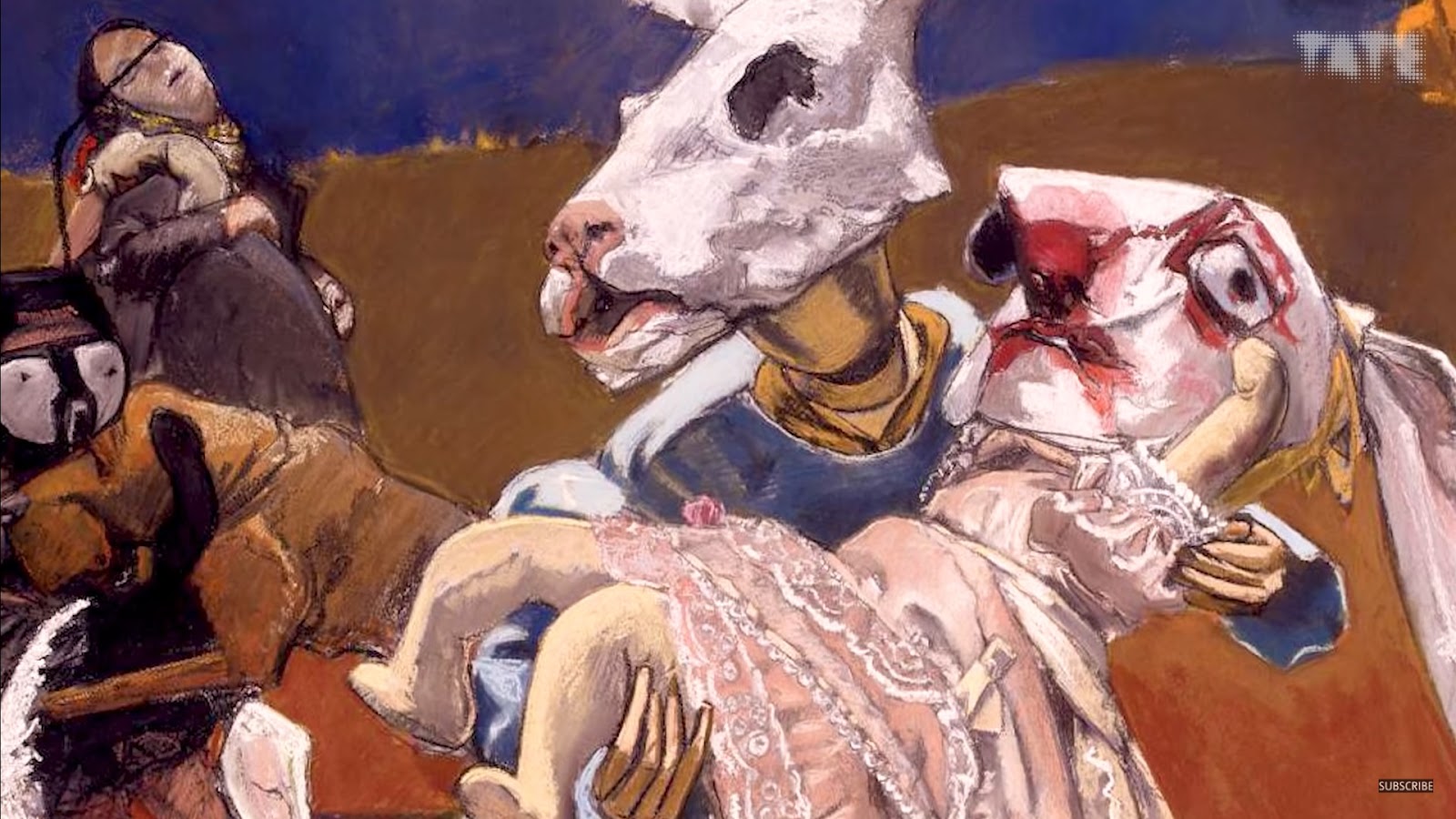
In 1994, she began to experiment with pastels... She describes working in pastels like working with your fingers.
STEVE: I love how she pronounces pastels like PAStels. As if they rhymed with castles.
LAUREL: Rego describes painting with pastels as like painting with your fingers. Which is funny because my idea of finger-painting is not that at all.
STEVE: My first finger-painting in preschool involved pressing cookie cutters onto potato slices to make shamrocks? And then using these potato shamrocks to stamp green clovers onto our paper? I don’t remember what we ‘painted’ but I’m sure it is vaguely racist.
LAUREL: Whoa. The shamrock stamps were potatoes? That is doubling down on the offensive stereotyping.
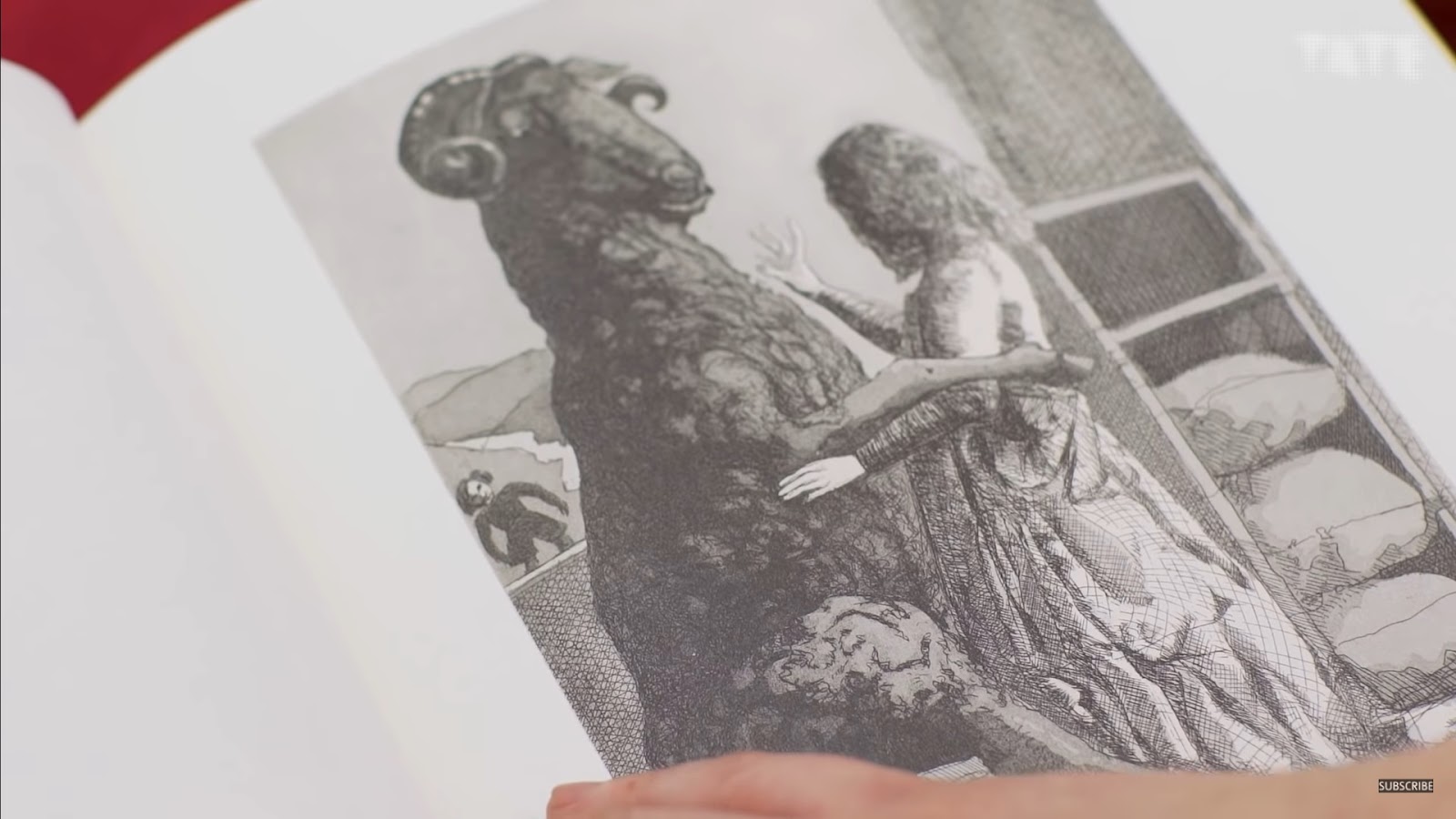
Rego started drawing when she was 4 years old, inspired by Walt Disney, and the stories her father read to her. The scenes in her pictures almost always take place in domestic settings and are filled with mysteries.
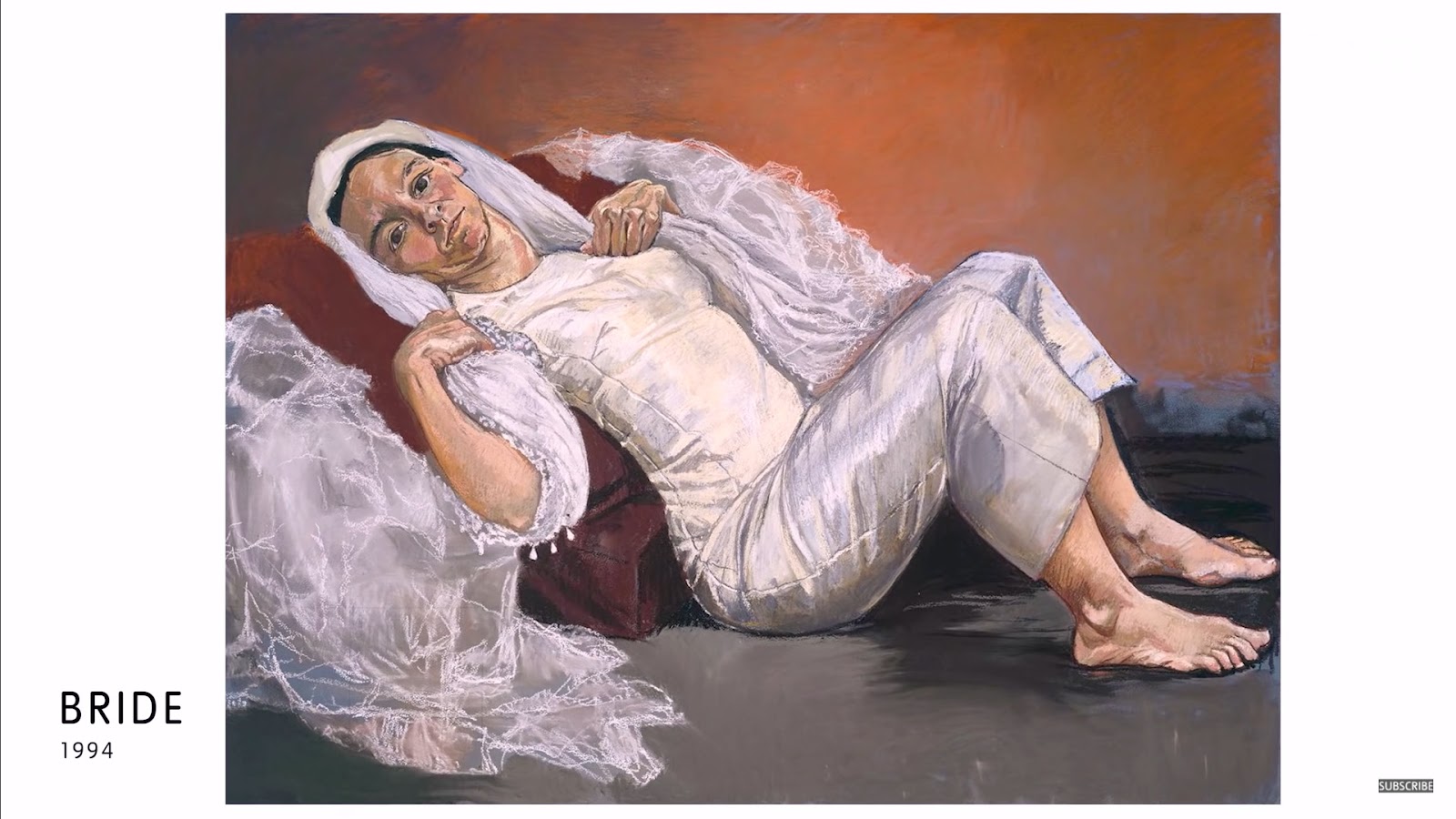
For this, I’m going to take inspiration from Rego’s pastel work, “Bride.” It’s part of a series of drawings called Dog Women.
STEVE: O wow we’re invited to participate … by following along! Doing her techniques?
LAUREL: I feel disappointed that we aren’t shown more of the Dog Women series. How can she just drop that in there and not give us more info?
STEVE: It’s a pretty awesome name.
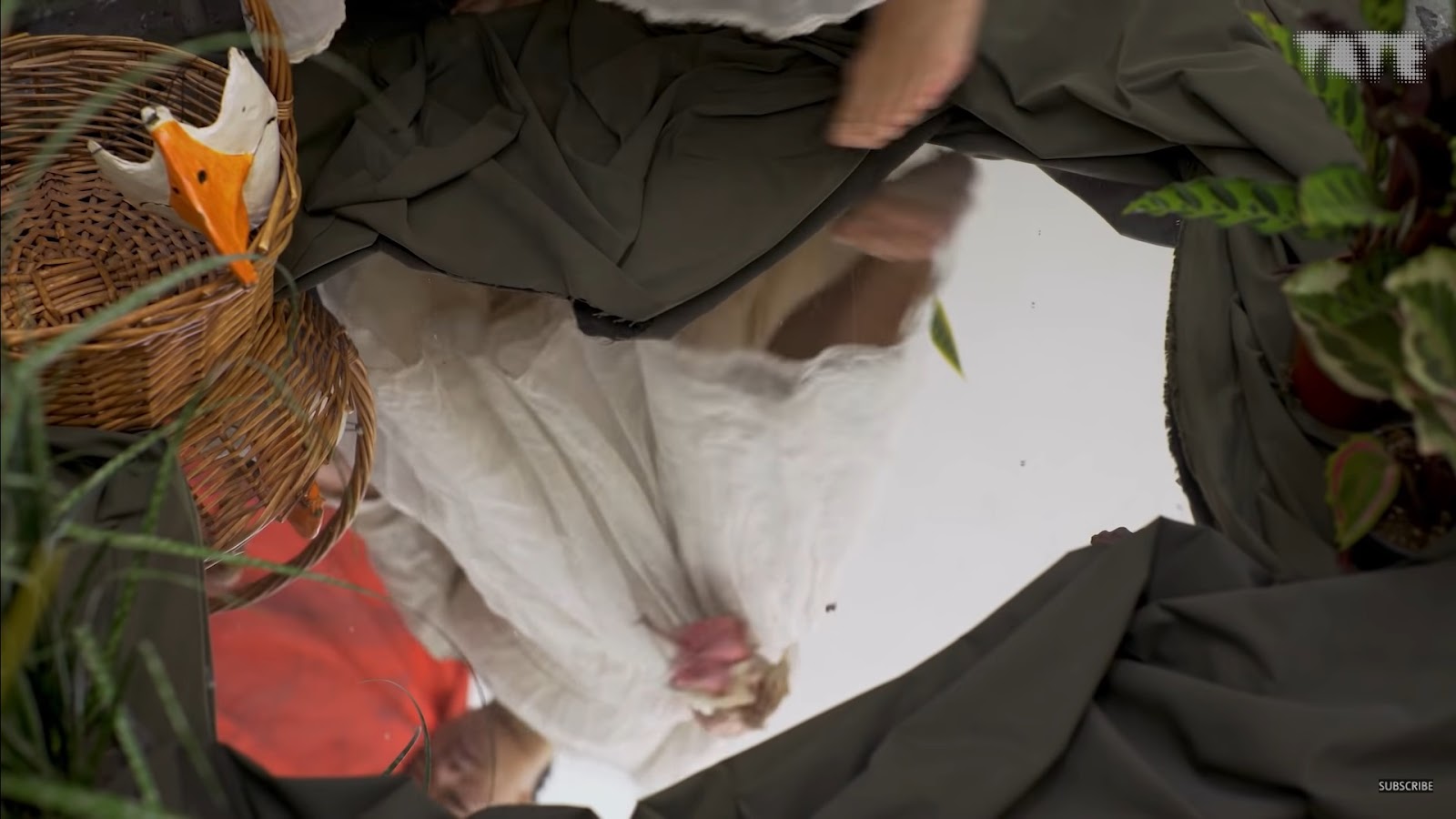
Rego always works from life, and never works from photographs.
“So with this drawing I’m just trying to understand the pose. Getting a sense of how the pose relates to the story”
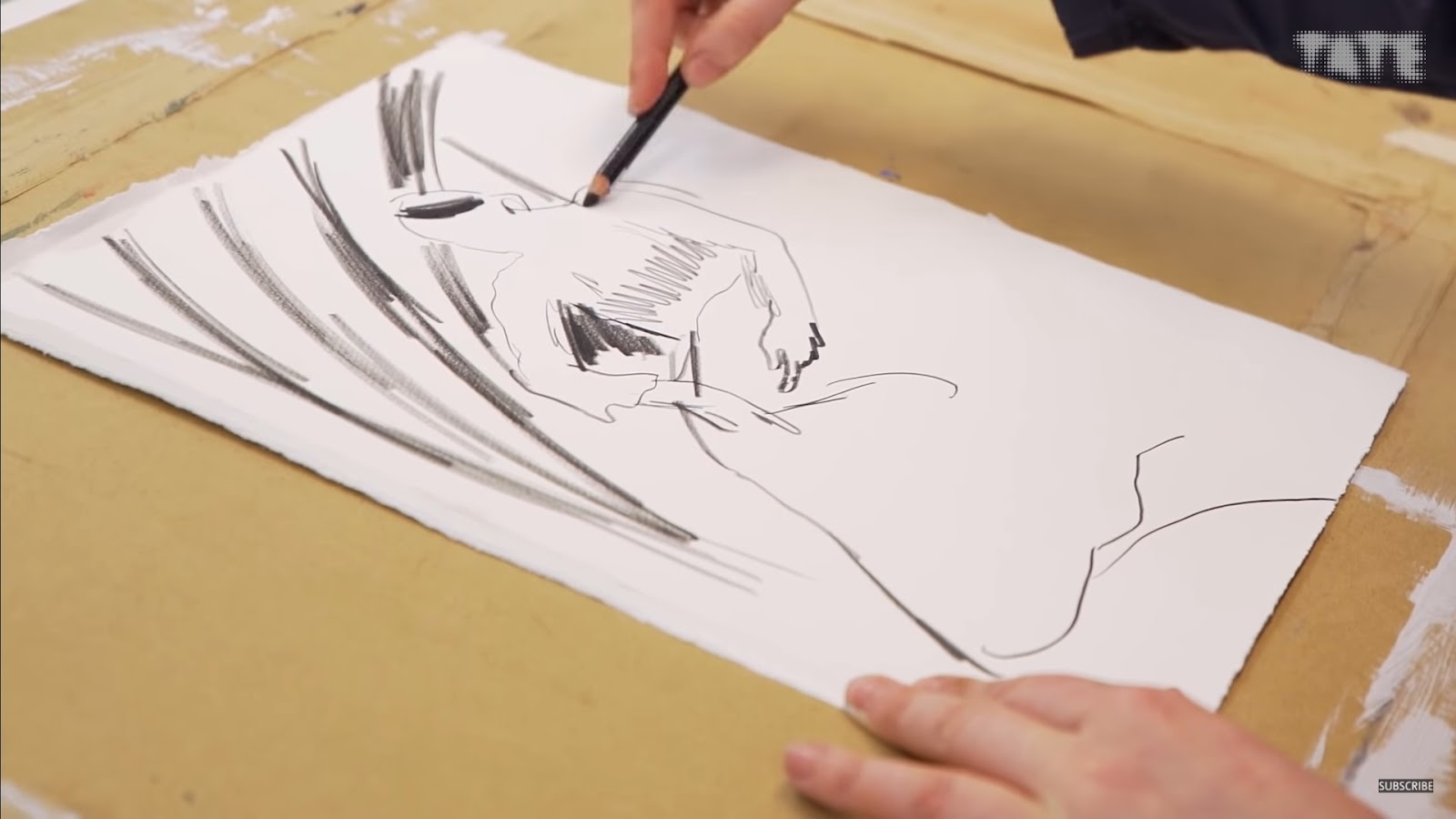
STEVE: I read something interesting about how interpretive dance can create narrative. Maybe not in the typical sense of linear plot and causality, but in the sense that individual poses and movements are narratives in themselves? Am I saying this smartly? Like, narrative is not a dotted line graph composed of movements, but each chronotope of pose/movement is a narrative in itself...maybe this is more about dance than painting.
LAUREL: Huh, I think I get what you mean. Feels like most people think of dance as basically athletic wordless theater? But each individual movement as a narrative—that sounds rad.
I think these ideas are transferable across the arts! They might not be directly applicable to everything when you translate across artistic mediums, but I think they are possible.
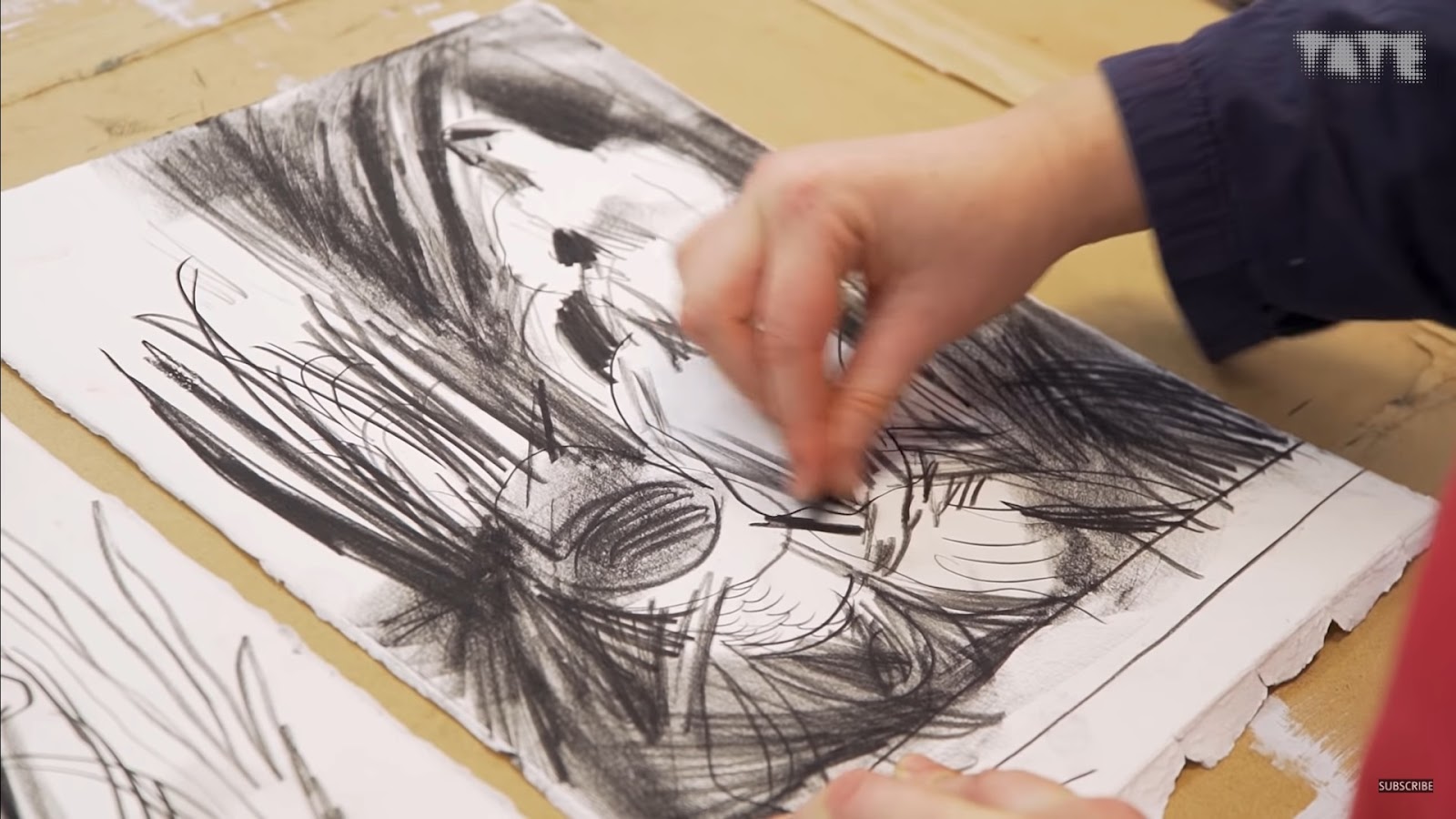
“For your next sketch, do a study that establishes the composition. This helps map out exactly what you want to include in the final image. I find it helpful to draw with my eyes unfocused. It helps me to see large areas of light and dark.”
STEVE: The idea of “unfocused” is so useful. For writing too? Omg she’s so loose when she draws. Pecking at the paper. She applies a layer of fixative after each layer of color. Yea, Laurel is right. This is not what finger-painting looks like to me.
LAUREL: That’s what I was wondering! To figure out how “unfocused” vision would apply to writing, you need to find out what the writings’ equivalent to areas of light and dark is.
STEVE: Maybe zooming out to think in terms of “patches” of feelings? When I get too fixated and futzy about individual lines, I always get stuck and burn out.
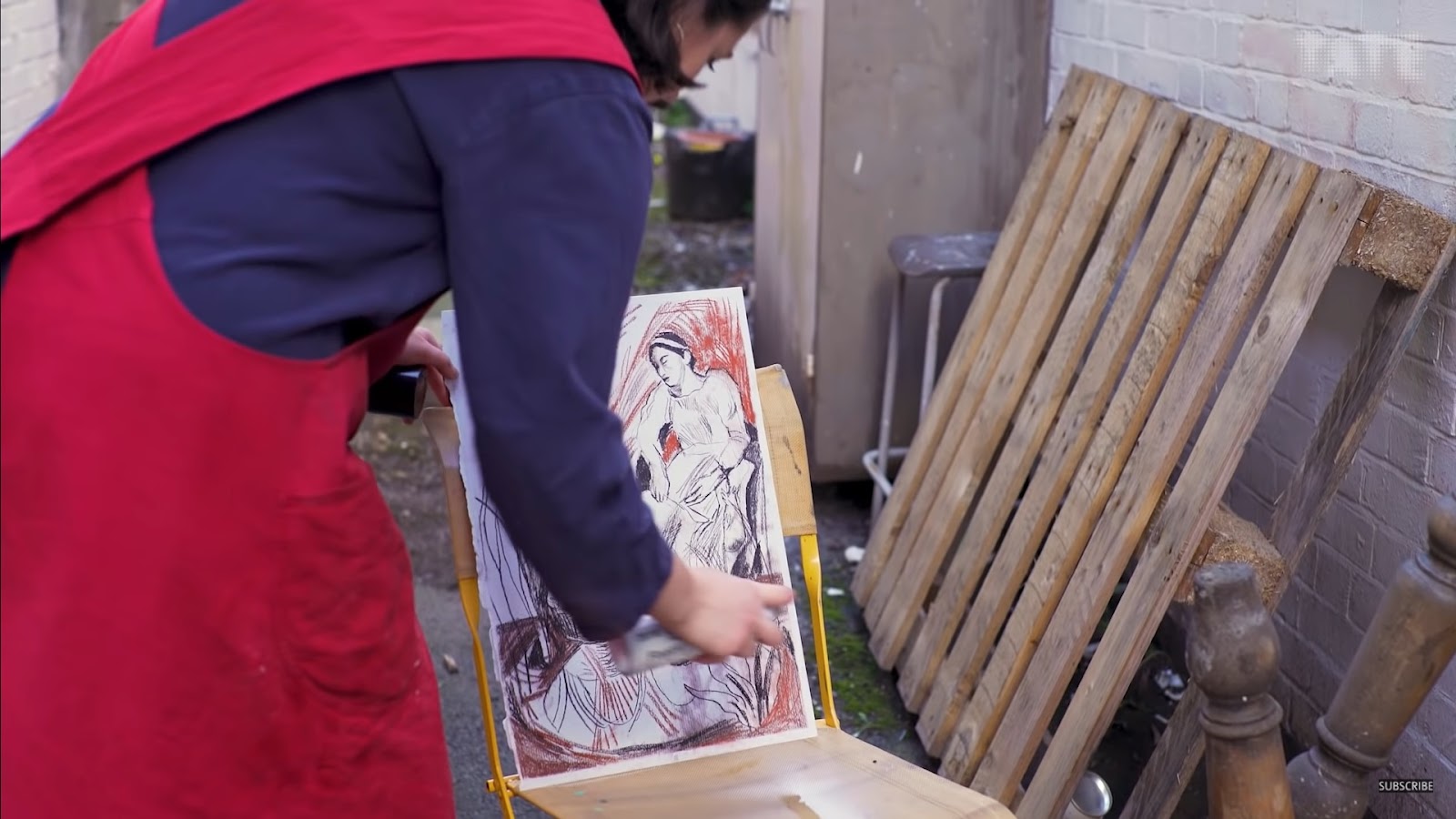
“Rather than mixing the pastels, Rego applies a layer of fixative between each stage of her drawing. This technique enables her to build up layers of color.”
STEVE: I wonder how good English kids are at spelling.
Drawer = Drorer
Lawyer = Lorer?
LAUREL: It’s kind of like how linguists study how the English language has changed by looking at how Shakespear rhymed “prove” with “love.”
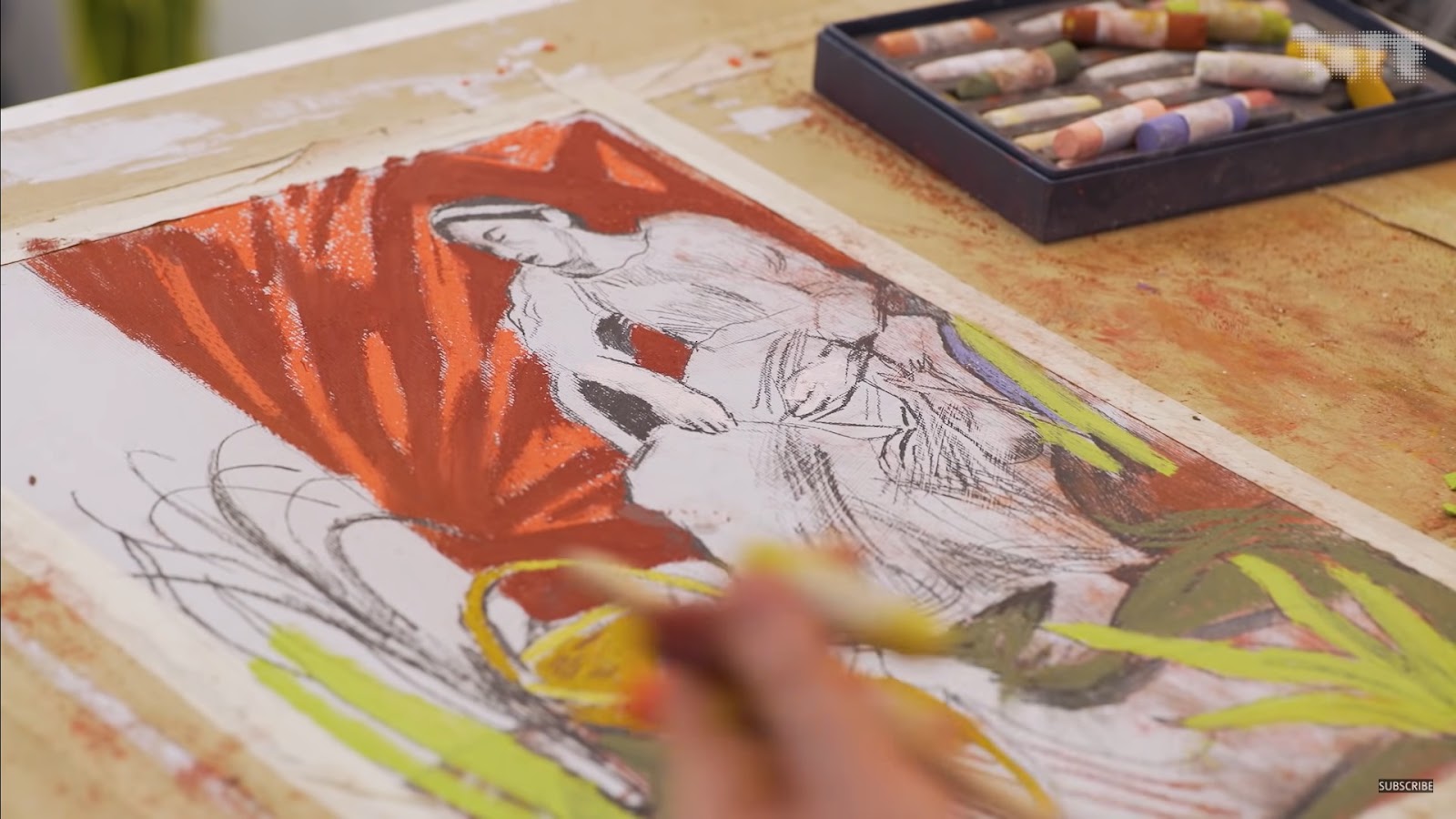
Rego uses pastels instead of paint because “pastels allow you to draw around and within the figure, whereas painting is just ‘filling in.’”
STEVE: Yes! I had to pause here. What does this imply? That pastel artists “find” the lines as they scribble… and that painters have blank contoured chunks mentally mapped onto the canvas? And then fill them in like coloring books? OK. I’m remembering the “paint bucket” function on MS paint.
It’s hard to understand. I feel like writing aphorisms are easier for people to get. “Fiction is like Legos. Nonfiction is like Jenga.” Everybody gets that, right?
LAUREL: One time I got a free haircut from a fancy West Village salon as part of a hair modeling thing. The stylist was like “some say cutting hair is like architecture. For me, it is sculpture, because I work with negative space.” I was 18 and thought everything sounded like bullshit. Then he proceeded to shave half my head without my permission.
What I’m trying to say, I think, is that these proclamations about art are sometimes interesting to think about, but other times they are a bullshit excuse to make shaving someone’s head without consent sound conceptual.
THE MS PAINT BUCKET. I do think that informs how I think of paint. I think of it as a complete covering.
STEVE: O wow how’d the cut turn out? If that happened to me, I’d be tossing my half-bald head constantly. In my haughtiest voice: “My stylist works with...negative space.”
LAUREL: The pictures live on Cristiano Cora’s FB and I wore hooded scarves for a year
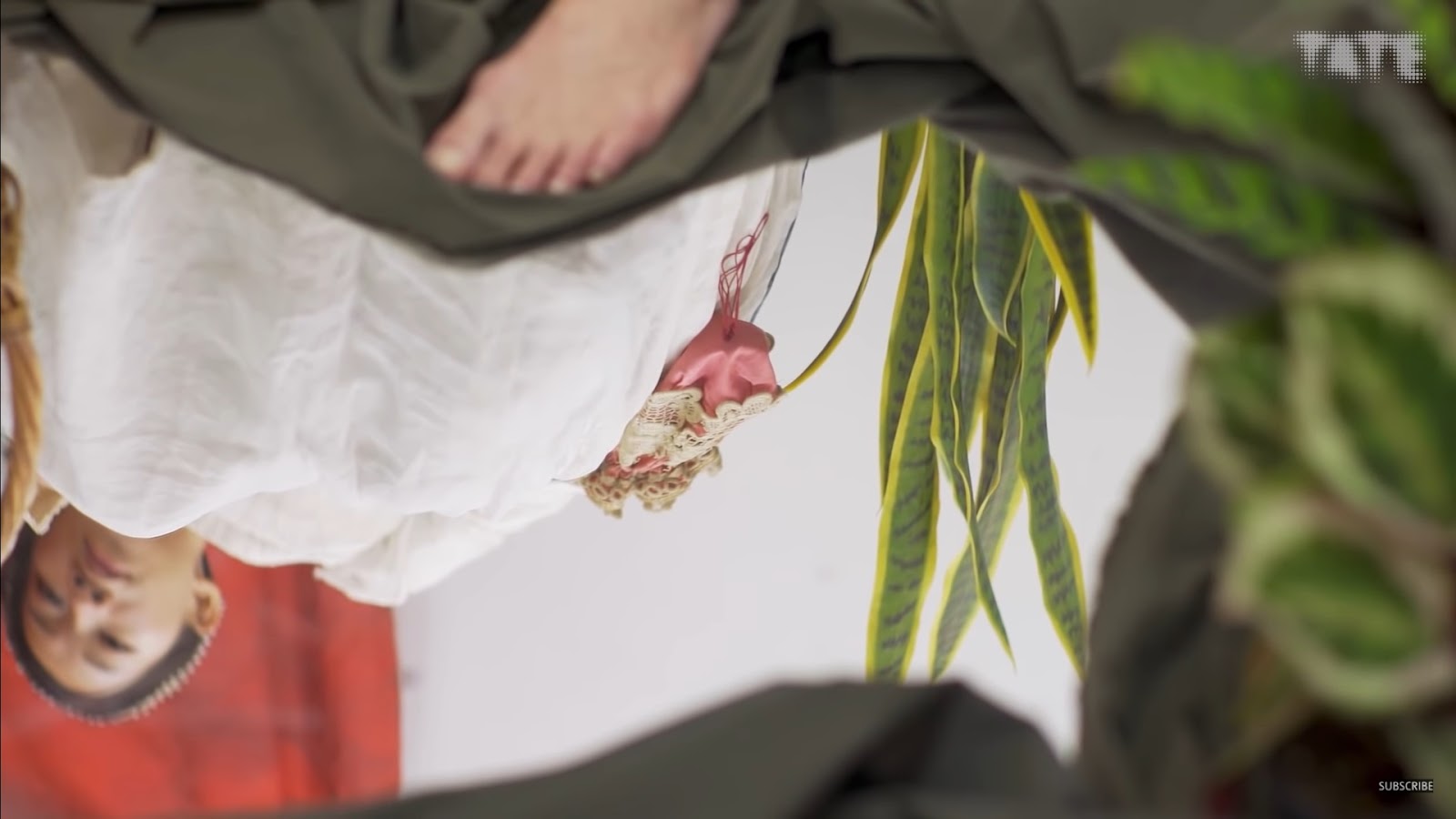
“Rego has spoken about expressing her fears and fantasies within her artwork, saying ‘The picture allows you to feel all sorts of forbidden things.’
STEVE: ...forbidden things like bone-deep anger at Cristiano Cora... I think the cut looks cool! And with hooded scarves? So futuristic!
“Why not try letting your imagination take over whilst you’re droring?”
LAUREL: Hahahaha droring. When I worked at a bakery and it came time to count the drawer, I had a coworker who always laughed at how I said “drawer.” To this day I’m still not sure how I was saying “drawer” or why the way I said “drawer” wasn’t right. Although the reason is def not bc I have a charming British accent.
STEVE: I think I say it with a single syllable? Some words just don’t work for some people. My brother’s girlfriend can’t say Colorado. She says it like Carrado and blames her braces but she hasn’t had braces for about 20 years. It’s the most endearing thing ever.
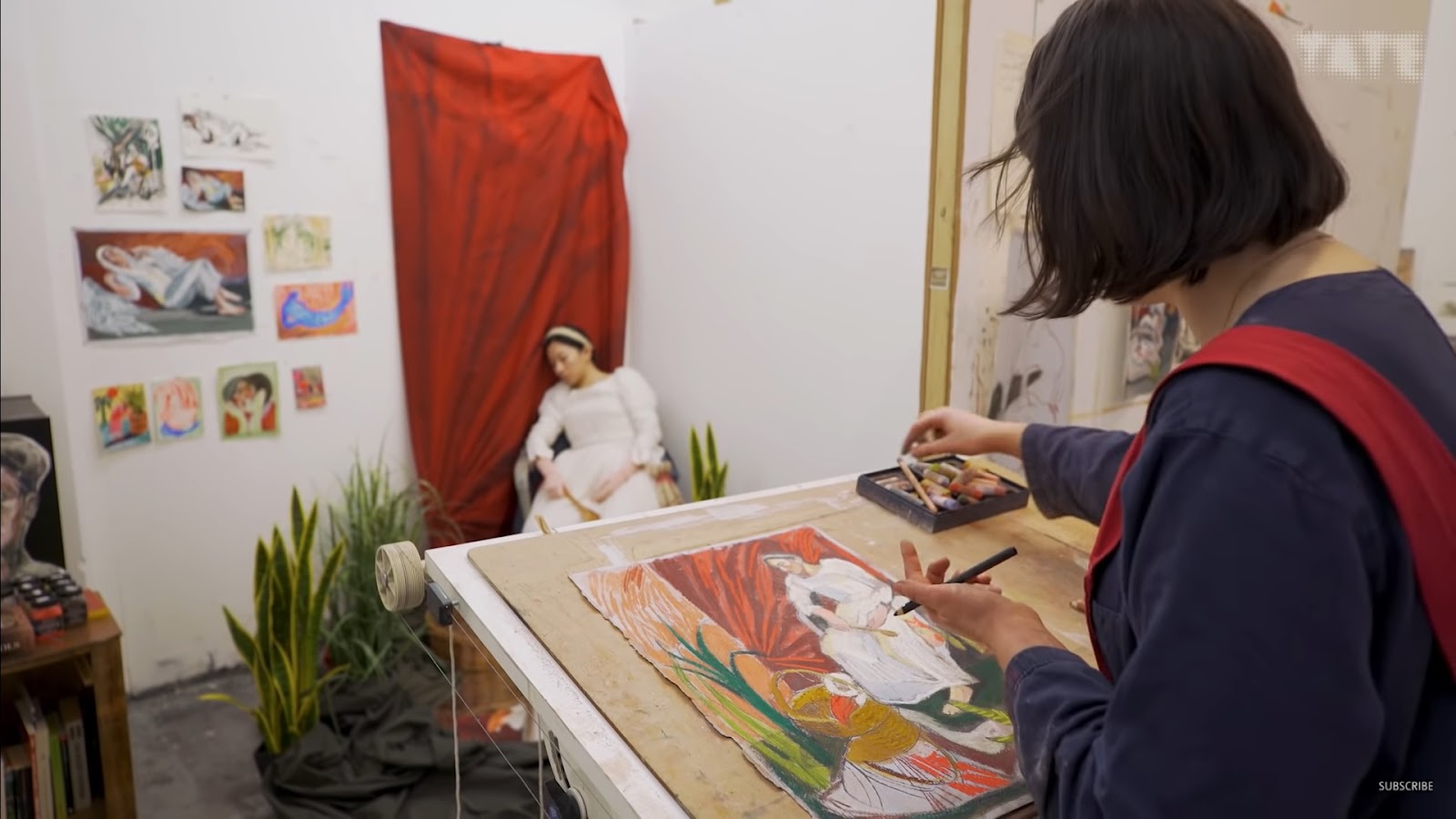
She starts off using harder pastels and then works over the top of them with softer ones. Rego says she prefers hard pastels because they give you a resistance and you can push and scratch into the surface with them.
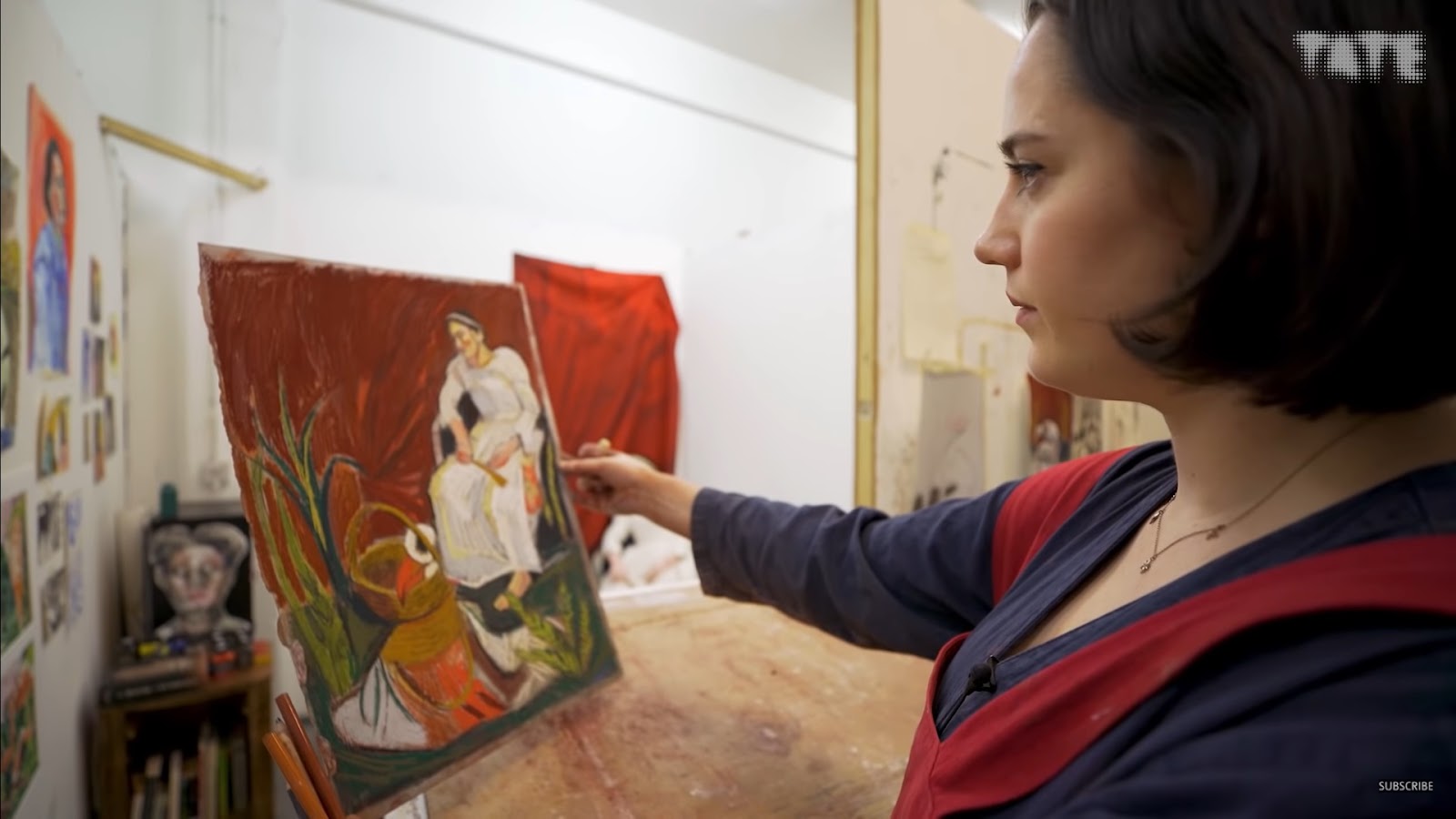
When you finish your drawing, step back and see if any areas need more work
STEVE: Everything she says about visual art, I’m going back and translating to writing. To evaluate whether or not that’s good advice. Would that be useful? Fun?
LAUREL: I especially like the idea of unleashing fears and fantasies. I know that is pretty mundane, but I don’t do it in my writing and would like to. But also my imagination needs a workout. It’s flabby.
STEVE: I’d like to be better at this too. Before I quit fiction (and came back to it), I wrote a bunch of stories in which the main character was pretty much me...but way cooler. I guess they call this a “Gary Stu?” My ego wouldn’t allow “him” to be pitiful, scummy, or scared, etc. Really ridiculous. I wish somebody would’ve taught me how to get past that.
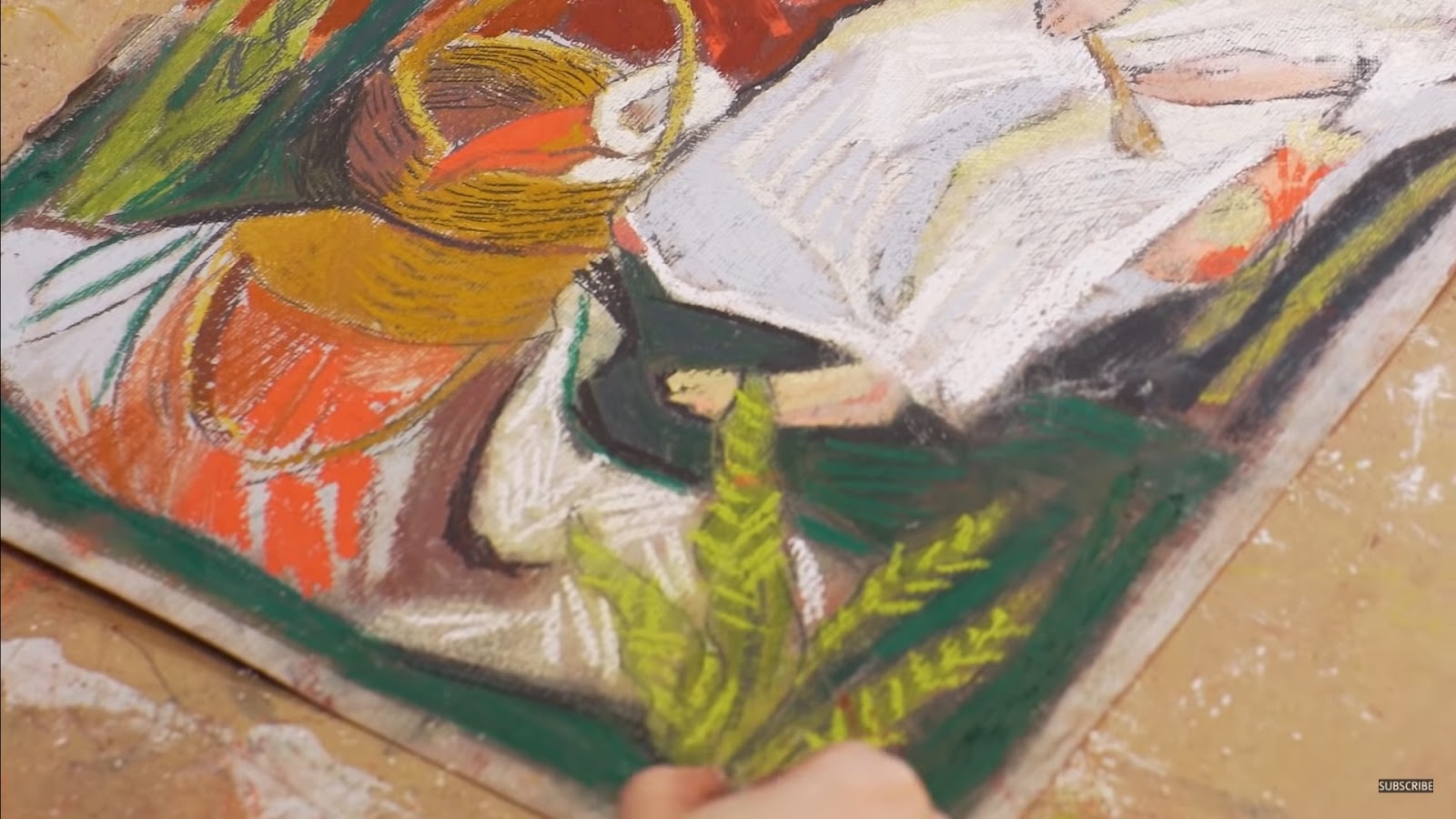
It’s important to look at the image as a whole. Think about the boundaries of your drawing and work right up to the edges of the page.
STEVE: “Work right up to the edges.” What would that mean for writing? Laurel, any idea?
LAUREL: I mean, my immediate thought is: NO MARGINS. I’ve been thinking about white space and layout of text, like, writing for the eye. I’ve been wanting to write in columns, like a newspaper, to encourage a faster reading pace.
What do you think?
STEVE: The idea of regulating the reader’s pace is so interesting to me. I often think about eye-speed vs. voice-speed and how to write lines that would “sound” or register the same at both, that would keep the integrity of their rhythms regardless. I think you’re onto something!
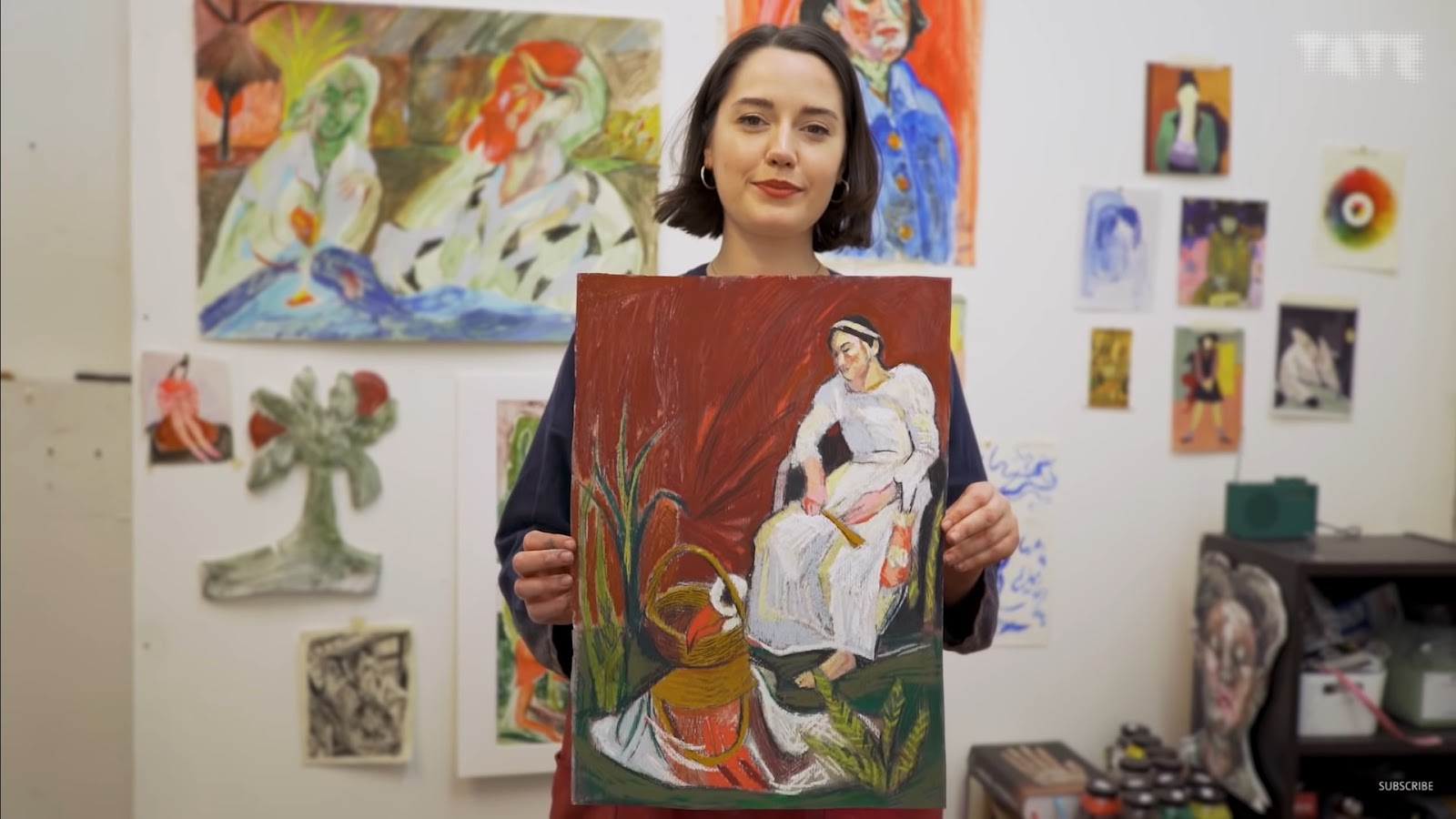
There you go. That was how to draw like Paula Rego.
STEVE: And...that’s it! Thank you Laurel for hanging out with me, virtually. And thanks, whoever you are, for reading along! Maybe we can make some Paula Regos together.
LAUREL: I need pastels, dammit. I did just get a pack of metallic Gelly Roll pens tho


